Explosion Proof Cameras for Class I Division 1 and Zone 1 Areas
Spectrum designs and builds explosion proof cameras in Houston, Texas, certified cFMus, ATEX and IECEx for hazardous areas. Choose a dome, fixed or PTZ camera, select housing material and connectivity, and request a quote from our engineers.
Choose Your Camera Series
Every Spectrum series is third-party certified for hazardous areas. Each family page lists its exact markings and certificate numbers. Select the configuration that best fits your monitoring application.

Dome Cameras
Compact dome profile for space-constrained environments. Wide-angle fixed coverage ideal for process units, offshore platforms, and classified areas where a low-profile mount is required.
Fixed Cameras
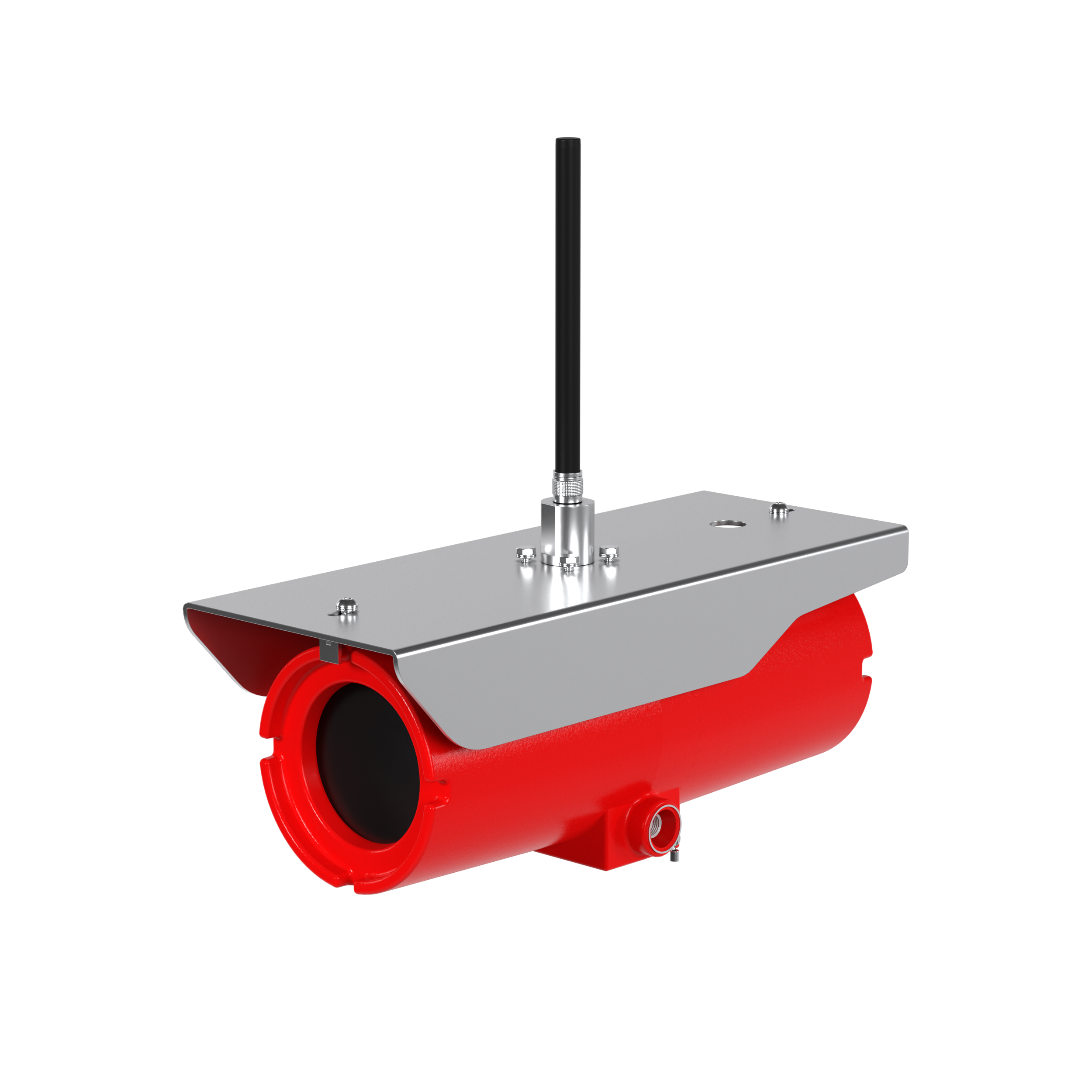
Lightweight aluminum housing for dedicated fixed-point monitoring. Low-light camera options and 4G/LTE connectivity for remote and low-illumination environments.

PTZ Cameras
Full pan, tilt, and zoom control for wide-area monitoring of large facilities. 360° continuous pan enables a single unit to cover extensive areas of a platform, refinery, or industrial site.
2025 Product Catalog
Full specifications, certifications, dimensions, and technical data for the complete Spectrum camera range — D-Series, F-Series, TEZP/FEZB, and accessories.
Complete Your Installation
Beyond cameras, Spectrum offers explosion-proof junction boxes and accessories engineered to complete a certified hazardous area installation from end to end.
Explosion Proof Junction Boxes
Certified junction boxes for cable termination and electrical connections within classified hazardous areas. Compatible with Spectrum camera installations and third-party wiring systems.
Camera Accessories
Mounting brackets, cables, conduit fittings, and ancillary components for complete hazardous area camera installations. Engineered for compatibility with Spectrum camera series.
Manufacturer Direct.
Globally Certified.
Manufacturer, Not a Reseller
Spectrum designs and manufactures explosion-proof cameras. Direct access to engineering support, technical documentation, and certification packages — without a middleman.
Global Certifications
Cameras certified for North America (cFMus), Europe (ATEX), international markets (IECEx), and regional certifications including INMETRO, and PESO — covering hazardous area standards in over 50 countries.
Complete Product Range
Fixed, dome, PTZ cameras, junction boxes, and accessories — a full range of explosion-proof products to address every monitoring need within a classified hazardous area facility.
Engineering Support
Our team in Houston, TX assists with area classification questions, product selection, and certification documentation for project submittals — from initial specification through delivery.
Five Standards.
50+ Countries Covered.
Each certification is issued by an independent accredited body after physical testing of the equipment. Available certifications vary by product — see the matrix below for specifics by model.

FM Approvals
United States · Canada
FM Approvals certification covers both the US (cFMus) and Canadian (FM Canada) markets under the NEC/CEC Class/Division classification system. Required for facilities operating under NFPA 70 (National Electrical Code) for Class I Division 1 & 2 locations where flammable gases or vapors may be present.
NEC Articles 500–506 · Class I Division 1 & 2

ATEX Directive
European Union
ATEX (Atmosphères Explosibles) is the European Union directive governing equipment for use in explosive atmospheres. Certification is issued by a Notified Body following testing to IEC 60079 standards. Required for all electrical equipment installed in Zone 1 & 2 classified areas within the EU.
Directive 2014/34/EU · Zone 1 & 2

IECEx Scheme
50+ Countries Worldwide
The IEC System for Certification to Standards Relating to Equipment for Use in Explosive Atmospheres (IECEx) is the international standard accepted in over 50 countries as the global benchmark for explosion-protected equipment. Particularly important for projects in the Middle East, Asia-Pacific, and Africa.
IEC 60079 Series · Zone 1 & 2

INMETRO
Brazil
INMETRO (Instituto Nacional de Metrologia, Qualidade e Tecnologia) certification is required for explosion-proof electrical equipment used in classified hazardous areas in Brazil. Based on ABNT NBR IEC 60079 standards and mandatory for Brazil's large oil & gas, petrochemical, and mining sectors.
ABNT NBR IEC 60079 · Zone 1 & 2

PESO Approval
India
The Petroleum and Explosives Safety Organisation (PESO) regulates the use of explosion-proof electrical equipment in India's classified hazardous locations. PESO approval is required for equipment used in oil & gas, petrochemical, and mining facilities across India's rapidly growing industrial sector.
IS/IEC 60079 Series · Zone 1 & 2
What to Look For in an Explosion Proof Camera
An explosion proof camera is a surveillance camera installed inside a certified enclosure that contains any internal ignition, so it cannot ignite the flammable gas, vapor or dust around it. The camera itself is standard; the enclosure and its certification are what make it suitable for a classified area. These five points decide whether a unit is right for your site.
Area classification
Start with the classification of the location where the camera will be installed: Class and Division under the NEC (North America) or Zone under IEC/ATEX (most other markets). The camera's marking must cover that classification, gas group and temperature class. Spectrum D-Series and F-Series carry Class I Division 1 and Zone 1 markings; TEZP and FEZB are certified under ATEX and IECEx for Zone 1 and Zone 21.
Third-party certification
Look for the certificate, not just the logo. Each Spectrum family is certified by an independent body and the certificate numbers are published on the family pages and on the certifications page: cFMus for the US and Canada, ATEX for the EU, IECEx internationally, plus INMETRO (Brazil) and PESO (India) where listed. Always match the certificate on the nameplate to your project documents.
Housing material and environment
Aluminum housings are lighter and the usual choice for poles, towers and process units. Stainless steel is the usual choice for marine, offshore and chemical environments. The D-Series is available in both; the F-Series is aluminum; TEZP and FEZB are 316L stainless steel. Check the ambient temperature range on the datasheet against the conditions at your site.
Camera inside and field of view
Dome, fixed or PTZ depends on what you need to see. A fixed camera covers one defined point, a dome covers a wide area from a low-profile mount, and a PTZ covers large sites with pan, tilt and zoom. Spectrum houses cameras from Axis, Bosch, Pelco, Avigilon, Hanwha and Verkada, so you can keep the camera platform your VMS already supports.
Connectivity and installation
Decide how video and power reach the camera: PoE over copper, fiber through a media converter, or wireless 4G/5G where cabling is not practical. Certified junction boxes and mounts complete the installation inside the classified area.
Documentation and support
Before you order, download the datasheet with its revision number, the installation manual and the certificate for the exact model. If you are unsure about the classification of your site, talk to a Spectrum engineer before specifying a unit.
Frequently Asked Questions
What is an explosion proof camera?
An explosion proof camera is a surveillance camera mounted inside an enclosure that is designed and certified to contain an internal ignition. If a spark or hot surface occurs inside the housing, the enclosure prevents it from igniting the flammable gas, vapor or dust in the surrounding atmosphere. The certification is issued by a third party and is specific to the hazardous area classification, gas group and temperature class the enclosure was tested for.
What is the difference between Class I Division 1 and Division 2?
Both refer to Class I locations, where flammable gases or vapors may be present. In a Division 1 location, ignitable concentrations exist under normal operating conditions, or frequently because of maintenance or leakage. In a Division 2 location, ignitable concentrations are present only under abnormal conditions, such as a container failure. Under the NEC, equipment identified for Division 1 may also be installed in Division 2 locations of the same class and group. The IEC/ATEX equivalents are Zone 1 and Zone 2 for gas, and Zone 21 and Zone 22 for dust.
Which Spectrum series fits which hazardous area?
D-Series dome cameras are certified cFMus for Class I, II and III Division 1 and Zone 1 and 21, with ATEX, IECEx, INMETRO and PESO, in aluminum or stainless steel. F-Series fixed cameras are certified cFMus for Class I Division 1 and Zone 1 and 21, with ATEX, IECEx and INMETRO, in aluminum. TEZP and FEZB PTZ cameras are certified under ATEX and IECEx for Zone 1 and Zone 21 and under PESO, in 316L stainless steel; they do not carry a North American Class/Division listing, so for Division installations choose the D-Series or F-Series. Each family page lists the exact marking and certificate numbers.
Can I select housing material and connectivity before requesting a quote?
Yes. On each product page you select the camera inside, the housing material where the family offers a choice, and the connectivity option. Add the configured unit to your quote request along with any junction boxes or mounts, and submit the list from the request a quote page. A Spectrum engineer reviews the configuration against your area classification before the quote is issued.
Find the Right Camera
for Your Application
Tell us about your hazardous area classification, installation environment, and monitoring requirements. Our engineering team will help you select and specify the right certified solution.